Podcast: Play in new window | Download
Ok, when we last left off, Augustine had become the Archbishop of England, had been given orders to make London the seat of the English Church, and had some Papal answers to some rather odd questions.

A Chronological History of Britain
Every episode of The British History Podcast that moves the story forward in a chronological way.

Podcast: Play in new window | Download
Ok, when we last left off, Augustine had become the Archbishop of England, had been given orders to make London the seat of the English Church, and had some Papal answers to some rather odd questions.

Podcast: Play in new window | Download
So last week we ended with Augustine converting the people of Kent to Christianity and AEthelberht coming out as Christian… was he converted by Augustine or had he already been converted? We just don’t know.

Podcast: Play in new window | Download
In the last several episodes we’ve been speaking about religion. We’ve spoken about the paganism that existed on the island, the christians that lived on the island, the reasons why individuals and rulers might want to convert, and of course we’ve spoken about what the church in Rome was up to and what their plans were.

Podcast: Play in new window | Download
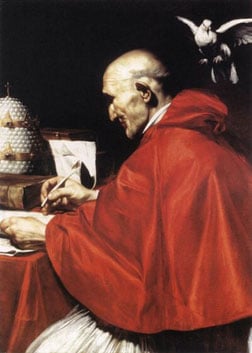
Ok, so lets leave Britain for this episode and head to Rome. I hear it’s nice this time of year.
Actually, I hear it’s really hot this time of year. But it seems like everywhere is right now… so Rome it is!

Podcast: Play in new window | Download
Alright, so we have two more kings of Wales before we leave Gildas and his spittle flecked rantings. And something that you might notice as we go forward is that we don’t haven’t been provided a Tyrant of Powys nor are any of the Eastern Kingdoms listed. Sure, we don’t know where Aurelias Conanus ruled, but there’s not affirmative statement of a king of Powys, Rheged, or other kingdom by Gildas. He was just an unknown ruler (or maybe just a failed usurper).

Podcast: Play in new window | Download
Today, we’re going to talk about some of the people who were really pissing Gildas off. People that drove him so batty that he just couldn’t contain his rage. And since Gildas was Welsh, he was predictably focusing his ire upon the Welsh kings. Though, like I mentioned earlier, the term “Wales” isn’t something that would be used at this time. Right now, they’re British… and saw themselves as part of the various kingdoms that populated Wales but not of any singular political body that we’d recognize as “Wales.” But regardless, all the action takes place in the Celtic West. So needless to say, this fits right in with the WelshCast.

Podcast: Play in new window | Download
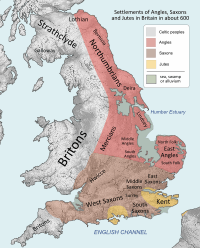
As you probably remember from the main podcast, before we had the appearance of major Anglo Saxon kingdoms, there was an initial migration and invasion in the sub-Roman period, with famous Germanic leaders like Hengest, Horsa, and Aelle appearing in Kent and Sussex. But there was also a staunch British resistance to these incursions lead, in part, by a man by the name of Ambrosius Aurelianus (who might have also been known as Riothamus and might have even been the inspiration for Arthur… but only maybe, because Arthur is a bit of a mystery).

Podcast: Play in new window | Download
We’re now at the point where Rome has withdrawn from Britannia (and more important to our story, from Wales), and today we’re going to talk about the impact that had upon the people.

Podcast: Play in new window | Download
Ever since I did the Scotcast I’ve been receiving messages on facebook, on twitter, on the forums, and I’ve even been getting personal emails asking for more about Wales. And my response has always been the same, I’ll do it but not yet.

Podcast: Play in new window | Download
Ok, from the title you might have gathered that we’re going to be talking about Ceawlin today. Now from all this discussion of various anglo saxon leaders, you might have noticed that while I’ve been saying Cynric, Cerdic, and Ceawlin… with C being a CH sound… we also have this Cutha fellow in Wessex, and Creoda in Mercia. And there the C is being pronounced with a hard C sound rather than a CH. So what’s the deal there?