86 – The Fall of Ceawlin… and others

Ok, from the title you might have gathered that we’re going to be talking about Ceawlin today. Now from all this discussion of various anglo saxon leaders, you might have noticed that while I’ve been saying Cynric, Cerdic, and Ceawlin… with C being a CH sound… we also have this Cutha fellow in Wessex, and Creoda in Mercia. And there the C is being pronounced with a hard C sound rather than a CH. So what’s the deal there?

Sign up for membership to read the full transcript.

Support the Show

85 – Ceawlin and the Sons of Ida

So it’s 568. And things in what will someday become England are still chaotic. Remember what was going on up north in Bernicia? Where Ida, who was probably part of some sort of Anglian group, had taken control of Bamburgh, then he died, and then his sons started taking over for him? Well, that’s still going on. It looks like Adda is probably dead. Maybe. It’s really muddy. And like I mentioned earlier, he probably was the king who was fighting with the Brits and killed a number of their kings… maybe… But sometime around now, Adda is no longer king of Bernicia and the throne is held by his brother: Aethelric. We think.

Sign up for membership to read the full transcript.

Support the Show

83 – Dark Age Warfare Combo Episode

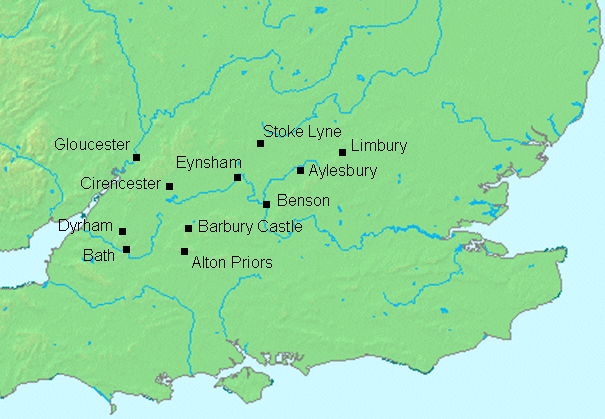
Ok, so last time we talked about how Aethelberht of Kent invaded the kingdom of Wessex and was pushed out by Ceawlin and his army. We don’t have a lot of facts regarding that conflict, we aren’t even told why they were fighting, but we know that they were both destined to become Bretwaldas and that in the end Aethelberht was chased back into Kent. And, presumably following this moment, Ceawlin earned the title of Bretwalda. So good for him.

But there’s a lot that goes into war beyond one king puffing up his chest and the other king saying “Come at me, bro!” Much as I wish it were that simple and comical, real war is a great deal more complex than that.

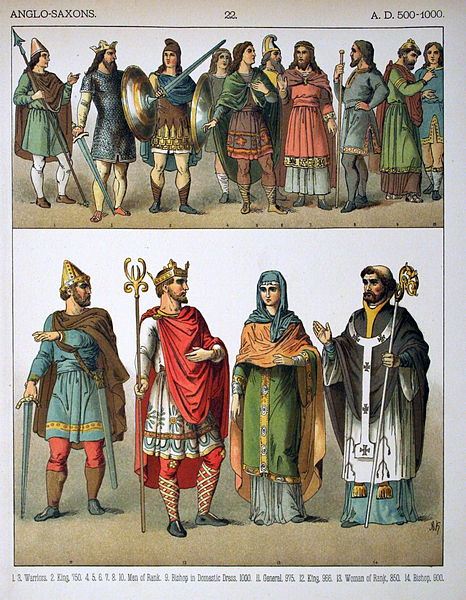
So lets start by talking about the men who would be fighting these battles. Of course, you have the kings (one of the Old English terms for these kings, by the way, was þeoden… yeah. Like theoden in the Lord of the Rings). Another fun anglo saxon term for King is Cyning. In old english, “ing” means scion. Which is why you start hearing of the sons of nobles being referred to as Aethlings… they’re the scions of nobles. But in this case, Cyning is the scion of the Cynn… which translates to the Kindred, or the family. This can be taken as either the ruling family, which would call back to that families tradition of rule, or it could be taken as the larger form of kindred… as the Cyning is the son of the people.

Sign up to read the full transcript.

Support the Show

82 – War. What Is It Good For?

So the year is 586, and Ceawlin is the leader of the men of Wessex. Wessex has been expanding their holdings to the north and the west, and have been growing in power. Conversely, in the East are the men of Kent under the leadership of AEthelbehrt, who (we are told) has been ruling since he was 8 years old. But the dates are a bit dodgey. And now AEthelbert is 16 years old. Maybe? And he’s growing in power. We know this because Kent is growing in wealth and are of sufficiently high status for the King to be marrying the daughter of the King of Frankia. Furthermore, he is a member of the Oiscingas, the ruling family of Kent… said to have been descended from Hengest himself.

Sign up for membership to read the full transcript.

Support the Show
81 – In Search of Unity: A Tale of Selective Memory

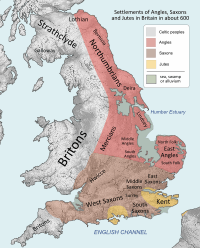
Ok, we have a battle coming up but things are still changing rather rapidly and there’s some interesting stuff to cover regarding that, such as language, religion, culture, warfare, and that question that’s probably nagging you at the back of your head… if we have wealthy powerful kings in England, why don’t we have anything resembling a Roman empire… or at least a mini Roman empire?

Sign up for membership to read the full transcript.

Support the Show
80 – Bloodletting

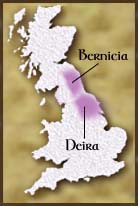
Ok, when we left off, Ida had become king of Bernicia and we had the beginnings of regional cultural groups. These groups were the result of a whole host of influences including everything from geographical features, to political decisions, to things as simple as wealth and a sense of cool. But the point is that we have gone from an island that saw itself as essentially Roman, to post-Roman (or sub-Roman, depending on which terminology you choose to use) where the system had broken down and (while you had communities moving to hillforts) you still had a continuation of the local culture… then we went to the early migration period where you had a blend of different cultural groupings all over the eastern part of the island, and now finally we’re getting to the point where those disparate pockets were starting to take the shape of larger communities with cultures that were distinct and separate from the sub-Roman culture as well as the cultures of the Germanic tribes where the settlers would have come from.

Sign up for membership to read the full transcript.

Support the Show
78 – It’s Only Natural

I’m going to wrap up the discussion of the development of regional cultures with a talk on an omnipresent (yet often ignored) influence on all of human development. This subject is often ignored in most disciplines, and it is definitely undervalued (unfairly) in many treatises on history. I speak, of course, of Nature.

Sign up for membership to read the full transcript.

Support the Show

77 – Cliques: How the In Crowd Created Our Culture

Ok, when we last left off, we were talking about a new class of elites in sub-roman britain. A group of individuals we identify as anglo saxons and kings, and we also mentioned the class of nobles that was growing up around them. We also talked about how that change, the increase in social stratification, might have come about.

Sign up for membership to read the full transcript.

Support the Show

75 – Cerdic and Cynric: A Story of… well… Probably Farmers

Alright, so when we left off, Cerdic and his son had recently arrived on the island and the Battle of Mons Badonicus had just taken place. So that’s exciting. And Gildas says that it was followed by peace, and procopius tells us that Germans were fleeing from Britannia as late as about 30 years later. And from the archaeological record, and the scattered references in written texts, it doesn’t seem like there were a lot of military warbands invading… but rather, as we will discuss in this episode, this looks more like farmers who were migrating. And this might have been happening for quite some time, since we’re told the Saxons had been landing on British shores for at least 100 years.

Sign up for membership to read the full transcript.

Support the Show